Flowering
0
Season closed in May. Counting resumes in February.
iNaturalist research-gradeobservations, 7-day window →
About the bloom
This year was a flowering year: 571 observations logged across the range between February and May. Flowering has probably become more common over the last century, because the Mojave’s rainfall and temperature swing harder than they used to.
The same swings are hard on seedlings. The conditions behind a big bloom may threaten survival and growth even as they boost flowering.1
Live conditions · four independent signals
Flowering
0
Season closed in May. Counting resumes in February.
iNaturalist research-gradeActive fire
0
Incidents of 100+ acres inside a box spanning the range — not confirmed habitat. Largest: FLAT, 1 acres.
NIFC / WFIGS currentDrought
D1
Moderate drought or worse across 61% of the sampled range counties.
U.S. Drought Monitor,Legal status
Protected by a dedicated statute rather than an endangered listing.2
CA Fish & Game Code,These four are deliberately not averaged into an overall reading. A single composite number would change daily, look authoritative, and correspond to nothing any scientist measures.
The mechanism
A Joshua tree can stand for a century. A seedling has one season to survive heat, drought, and heavy herbivory. Where the desert has crossed that threshold, the adults remain and the next generation simply never appears — stands of adult trees that look healthy but can no longer produce seedlings, destined to vanish once this generation dies.3
It varies by region, and it would be misleading to flatten that. Populations at the hot, dry southern and low-elevation edges are largely mature individuals with limited recruitment; northern populations are often surrounded by seedlings and saplings.4
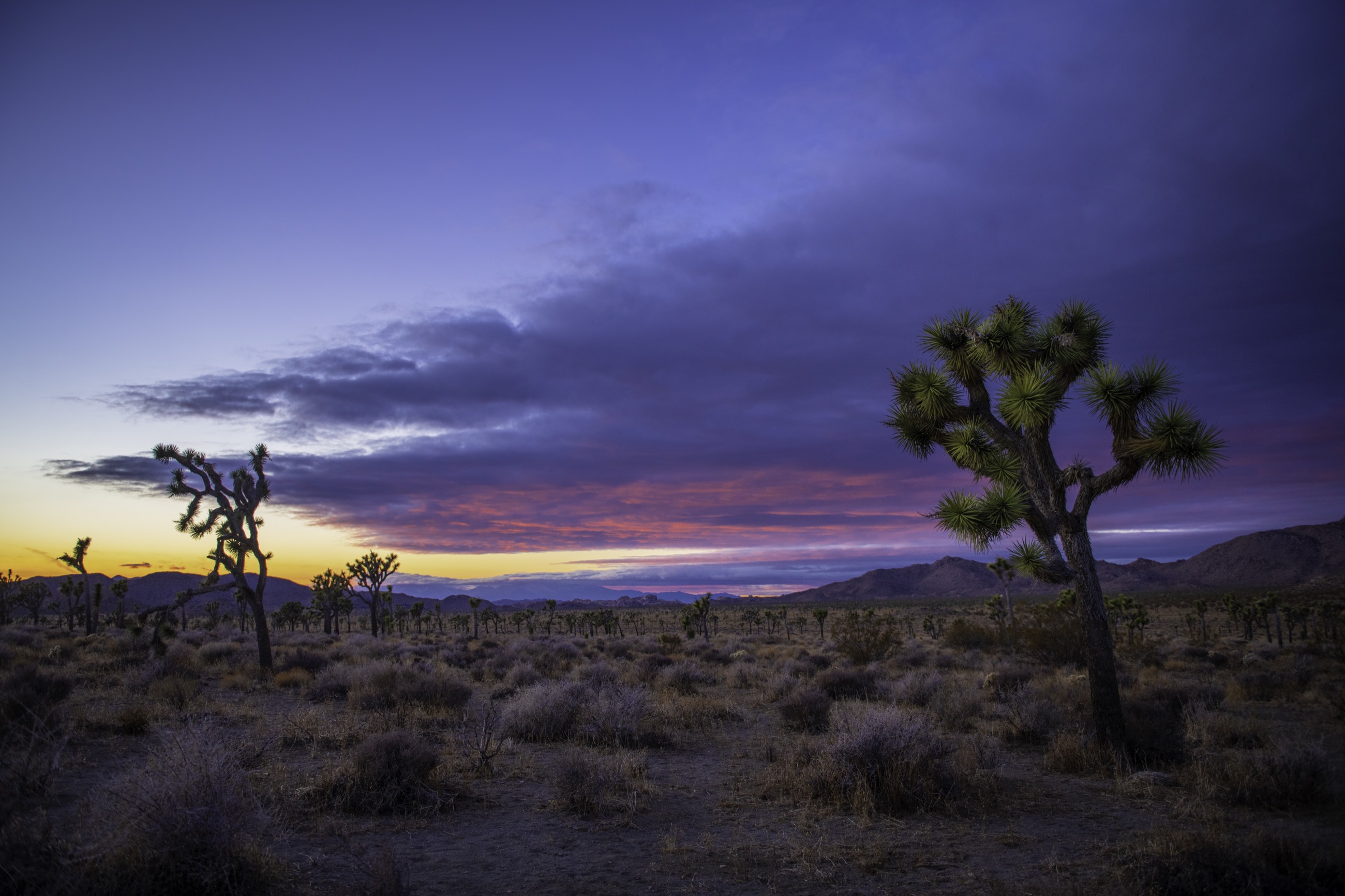
The groves in the photographs are at the southern edge.
Recruitment, by region
→ NO MEASURABLE REPLACEMENT
→ STILL RECRUITING
Fire
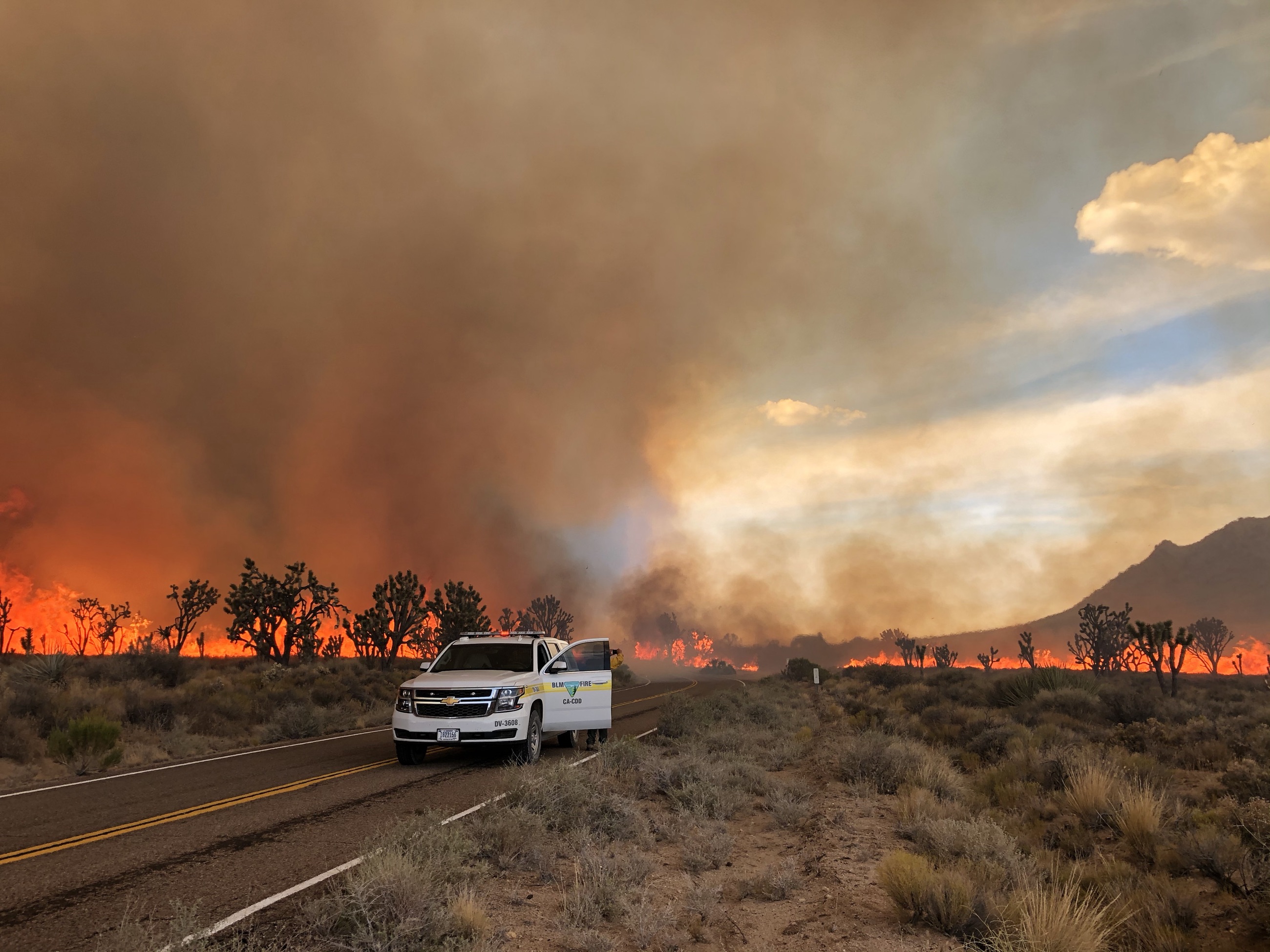
Joshua trees have no adaptation to fire and burned stands do not regenerate. Two nights in the last six years removed more mature trees than any drought on record.
Cima Dome, Mojave National Preserve — one of the densest Joshua tree forests anywhere. Mortality estimates run into the high hundreds of thousands.5
Crossed from Nevada into the preserve, burning through New York Mountains habitat that had never carried fire at that scale.
Fixed by statute · never stale
These dates come from the law itself, so this section stays accurate with nobody tending it — no campaign list to rot, no newsletter to abandon.
A public meeting on or before 31 August 2026, reviewing the species’ status and whether the conservation plan is working — then at least every two years.2
Commission meeting agendas →RECURRING, INDEFINITELY
EVERY 1 JANUARY
The only regular public accounting of permits issued and trees legally removed. Linked here the day it posts.
CDFW western Joshua tree →BY 1 JANUARY 2033
The statute’s own scheduled reassessment of whether protection is working.
Read § 1927 →ANY DAY · NO DEADLINE
CDFW accepts comments and new information at any time and considers them for recommended amendments.6
The conservation plan →Act · permanent channels only
An unmaintained site cannot honestly rank charities or track campaigns. It can publish the standing points of contact where one person still moves the outcome.
01 · REPORT
CalTIP is the first point of contact for a possible violation. Photograph it, note the cross streets, call.7
(888) 334-225802 · WRITE
Comments accepted at any time. First-hand, local, specific observations carry the most weight.
WJT@wildlife.ca.gov03 · OBSERVE
The 120-year flowering record was built from crowdsourced observations. Seedling records are rarer and worth more.
iNaturalist →04 · FUND
Climate and fire aren’t solvable from here. Development is — and land held is loss prevented, not mourned.
mdlt.org →Sources · last verified OCT 26, 2026